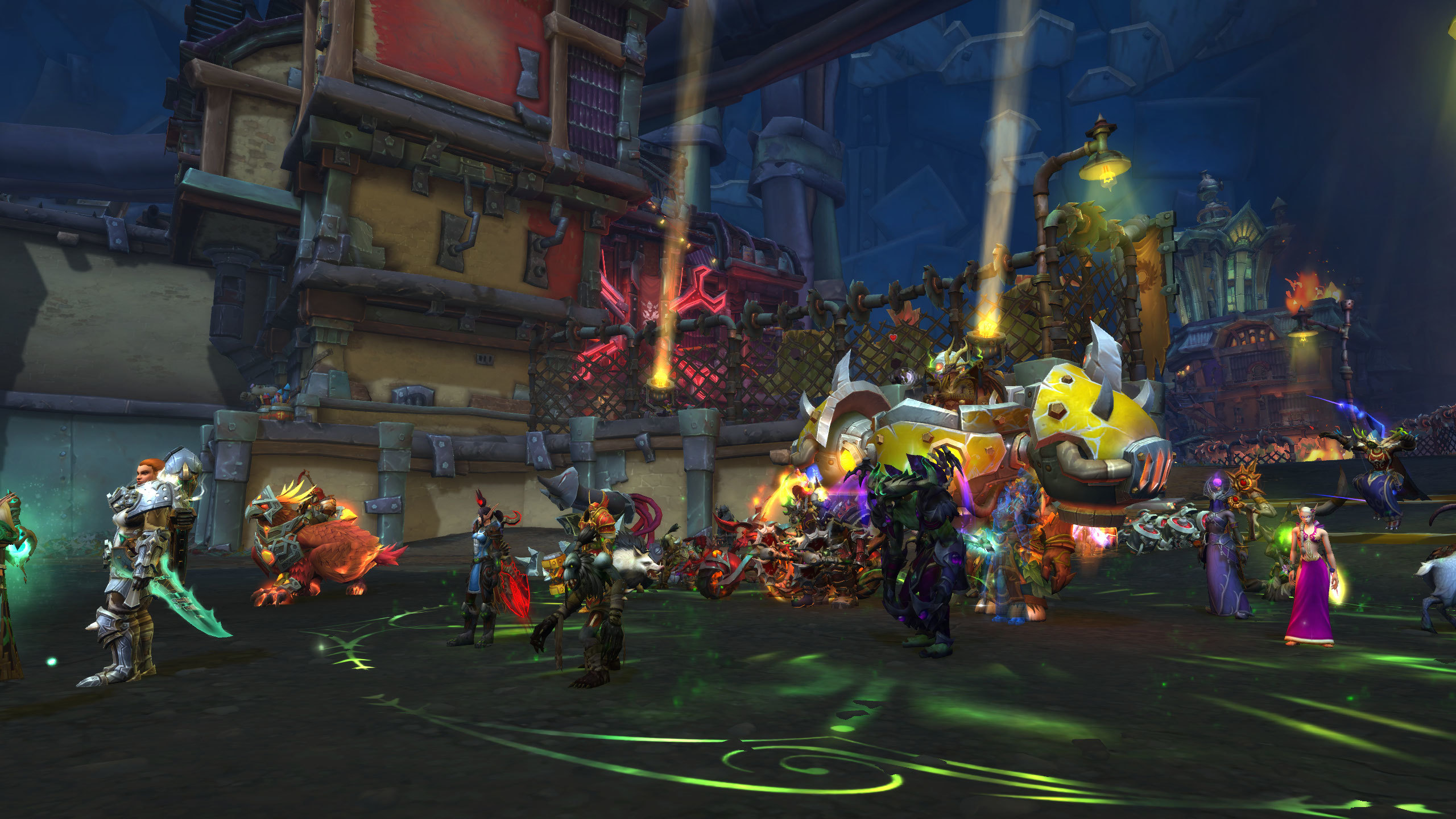
In high-pressure raid encounters, information is as critical as damage or healing. The Clarity of Raid Callouts defines the raid’s Information Flow—the speed and accuracy with which instructions move from leadership to execution.
Clear callouts produce Instant Response, where players act reflexively and correctly. Poor or ambiguous callouts create Delayed Decision Making, forcing players to interpret intent mid-fight, costing time, globals, and often lives.
This expanded analysis explores why callout clarity matters, how poor information flow compounds mechanical difficulty, and how disciplined communication directly increases encounter success.
Information Flow as a Mechanical Resource
Raid communication functions like a shared nervous system. The faster and cleaner the signal, the faster the raid reacts. Every second spent processing unclear instructions is a second not spent moving, interrupting, or mitigating damage.

Instant Response occurs when a callout requires no interpretation. The player hears the command and executes immediately. Delayed Decision Making occurs when the player must first answer internal questions such as “Is that me?” or “What exactly does that mean?”
Even a half-second delay can result in:
- Missed interrupts
- Late defensive usage
- Incorrect positioning
- Chain reactions of avoidable damage
The Role of the Shotcaller
The Shotcaller is the single authoritative source of truth during the encounter. Their responsibility is not to explain mechanics, but to convert strategy into immediate, executable commands.
Effective Shotcallers:
- Speak only when action is required
- Use consistent language every pull
- Eliminate emotional tone and filler words
- Override background chatter instantly
When the Shotcaller’s voice is predictable and authoritative, players learn to react automatically without hesitation.
Protocol for Clear, Actionable Callouts
Every callout must answer three questions instantly: who acts, what action is required, and when it must happen. Anything beyond that is noise.
- Targeted Command: Identify the exact player or role. Broad calls create hesitation and responsibility diffusion.
- Action + Location: State the action and the destination or target explicitly. Avoid descriptive language that requires interpretation.
- Timing Anchor: Use absolute timing cues such as “NOW,” “NEXT CAST,” or countdowns. Relative language creates delay.
Callouts should never explain why during combat. Explanation happens between pulls, not during execution.
The Compounding Cost of Ambiguity
Ambiguous communication rarely causes immediate wipes on its own. Instead, it creates small delays that stack until the encounter collapses.
| Ambiguous Callout | Resulting Delay | Clear Callout Solution |
|---|---|---|
| “Someone interrupt.” | Multiple players hesitate, interrupt lands late or not at all. | “Mage, INTERRUPT NOW.” |
| “Be careful here.” | Players stop DPS and scan randomly. | “MOVE LEFT, STACK BLUE.” |
| “We’re behind.” | DPS panic and overcommit, causing deaths. | “Hold cooldowns, next burst at 30%.” |
Over time, these delays reduce confidence in leadership, increase mental load, and directly contribute to fatigue errors.
Consistency and Language Discipline
Clarity is not just about wording—it is about consistency. Using the same phrases for the same mechanics every pull trains muscle memory and reduces reaction time.

Language discipline includes:
- Fixed marker names (never switching colors or labels)
- Identical phrasing for recurring mechanics
- No improvisation under pressure
- No overlapping voices during callouts
When language is consistent, players act before conscious thought, which is the true definition of Instant Response.
Conclusion
The Clarity of Raid Callouts is the backbone of effective Information Flow. Clear, targeted, and consistent commands enable Instant Response and reduce cognitive load during high-stress moments.
Poor callouts create Delayed Decision Making, turning simple mechanics into avoidable failures. Groups that master communication execute faster, wipe less, and progress more efficiently—often without changing strategy at all.