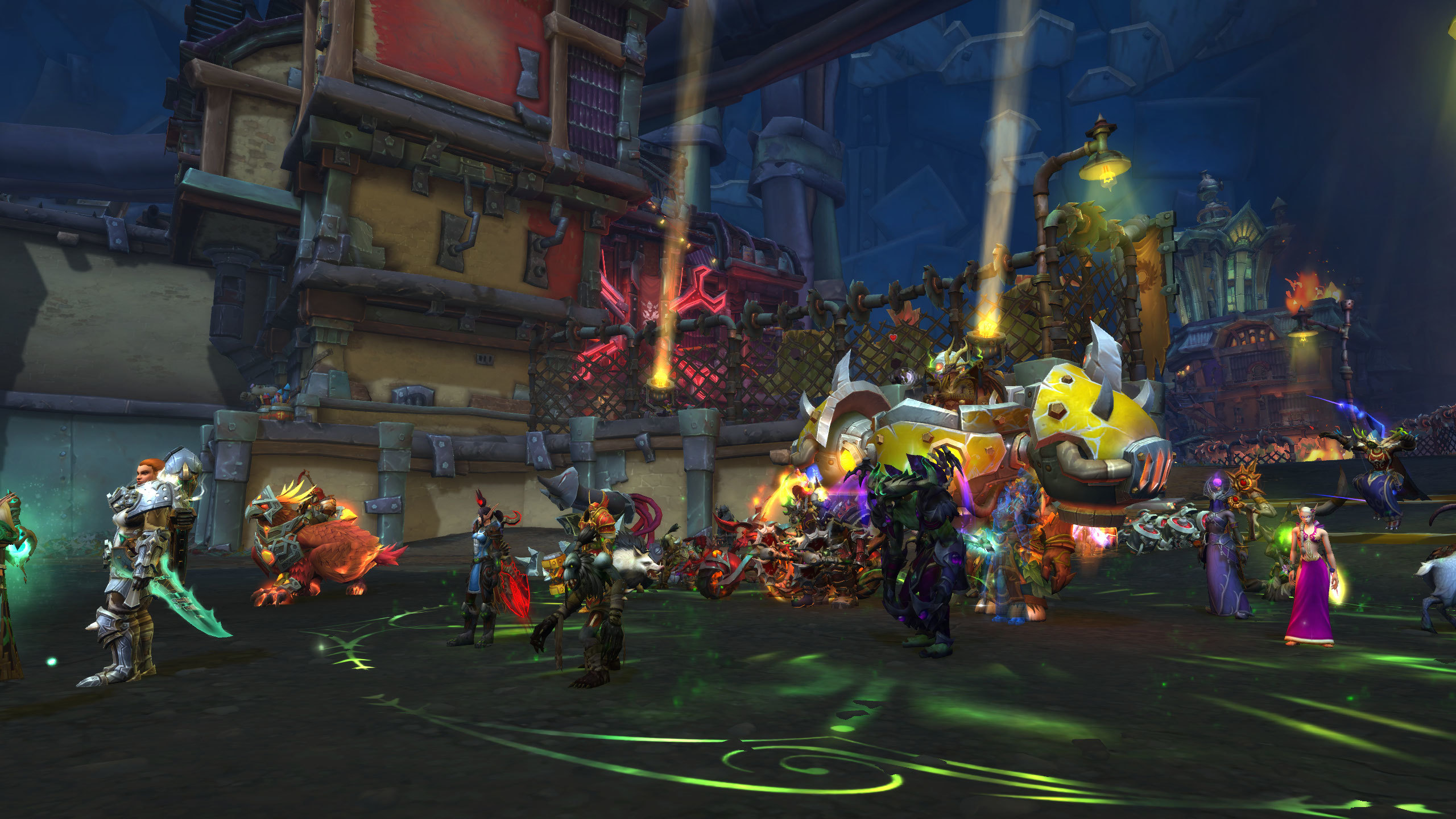
In high-end raid and dungeon environments, raw damage potential is rarely the limiting factor. Instead, success hinges on how well temporary multipliers are aligned. External Buff Application Timing is the defining Offensive Synchronization discipline that determines whether a group converts cooldown usage into decisive burst or wastes power through poor alignment.
Groups that master this timing create Peak Output Windows, where personal cooldowns, external buffs, and encounter vulnerabilities stack multiplicatively. Groups that fail this discipline experience Staggered Gains, where buffs overlap poorly, reducing total damage despite identical gear and skill.
This article expands on the mechanics of synchronization, the psychology of timing errors, and the measurable cost of fragmented buff usage.
The Mathematics of Stacked Multipliers
Damage optimization is multiplicative, not additive. External buffs such as Power Infusion, raid-wide stat increases, and damage-taken debuffs amplify the value of personal cooldowns.
When these effects overlap fully, damage scales exponentially. A cooldown used without an external buff is weaker than the same cooldown used inside a synchronized burst window.
Peak Output Windows are deliberately engineered moments where:
- Personal offensive cooldowns are active
- External buffs are already applied
- Damage amplification debuffs are fully stacked
- Encounter mechanics allow uninterrupted damage
Any deviation from this alignment reduces the effective value of every cooldown involved.
Why Timing Matters More Than Buff Quantity
Many groups focus on how many buffs they have available, but not on when they are applied. This leads to a false sense of optimization.
A single external buff applied at the wrong moment can be less valuable than no buff at all, because it fails to enhance the highest-impact abilities.
Staggered Gains typically occur when:
- Buffs are applied reactively instead of preemptively
- DPS activate cooldowns before receiving external buffs
- Debuffs land after burst abilities have already been used
- Buff targets are chosen based on habit instead of output potential
These errors do not feel dramatic, but over the course of a fight they represent massive lost damage.
The Offensive Synchronization Protocol
Proper synchronization requires planning, communication, and strict execution discipline. External buffs should never be improvised.
- Preemptive Application: External buffs are applied immediately before or simultaneously with the anchor cooldown (Bloodlust, Heroism, or scheduled burst call). The DPS must receive the buff before pressing their major cooldown.
- Debuff Precedence: Damage-taken debuffs must be active before the first global of burst damage lands. Late debuffs waste the most valuable part of the window.
- Target Optimization: Single-target buffs are assigned to DPS whose cooldown profiles gain the most from the buff, not simply the highest overall meter position.
This protocol turns buff usage into a predictable, repeatable damage engine rather than a chaotic boost.
The Hidden Cost of Fragmentation
Fragmented buff usage creates damage loss that is difficult to see on short-term meters but devastating over progression.
| Synchronization Failure | Resulting Inefficiency | Encounter Impact |
|---|---|---|
| Late external buff | Buff misses peak cooldown globals | Boss survives burst phase with excess HP |
| Early buff expiration | Final cooldown abilities unbuffed | Reduced pressure during critical phase |
| Wrong buff target | Low synergy with cooldown profile | High-value utility effectively wasted |
Over time, these inefficiencies force longer fights, increase healer strain, and raise the likelihood of late-fight failures.
Synchronization as a Leadership Responsibility
Offensive synchronization is not an individual responsibility. It is a leadership and coordination problem.

Raid leaders and support players must:
- Define exact buff timings in advance
- Assign buff targets clearly and consistently
- Use verbal or timer-based cues for application
- Review logs to identify misalignment patterns
When leadership treats buff timing as a core mechanic, overall damage consistency improves dramatically.
Conclusion
External Buff Application Timing is the cornerstone of Offensive Synchronization. When executed correctly, it creates Peak Output Windows that define successful progression.
Poor timing fragments damage into Staggered Gains, forcing longer fights and unnecessary wipes. Mastery of this discipline transforms identical cooldowns into vastly different results.