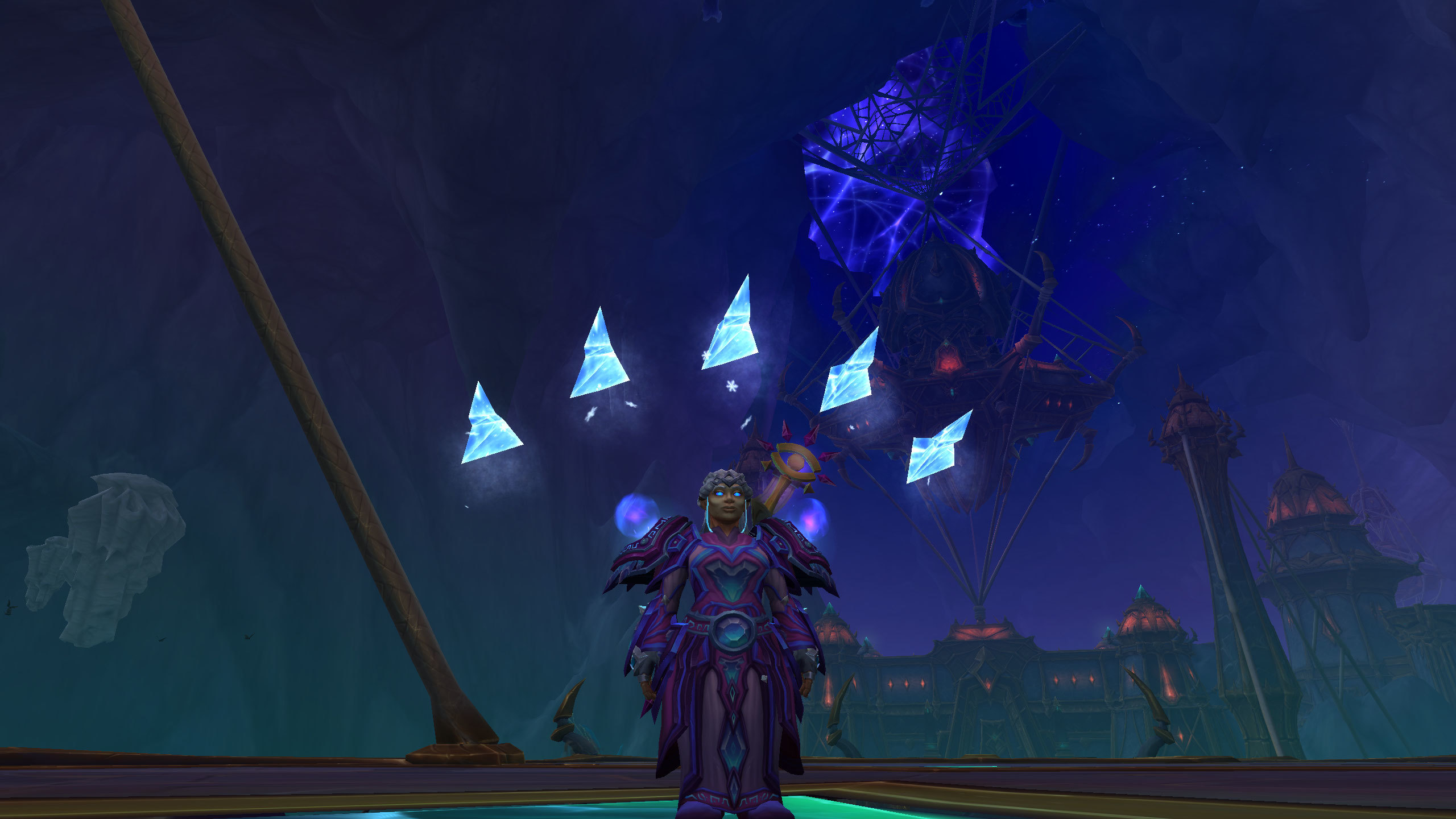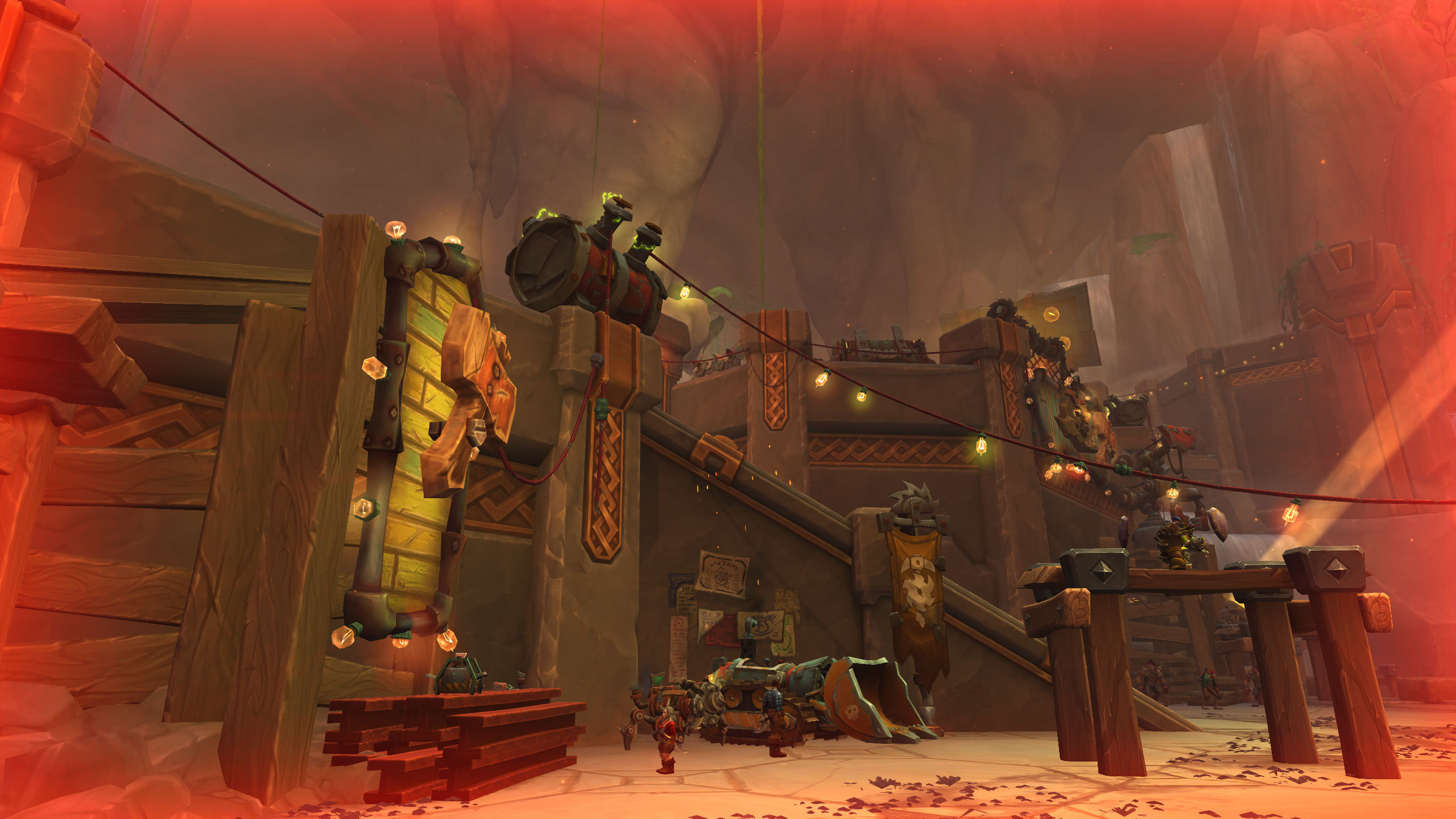
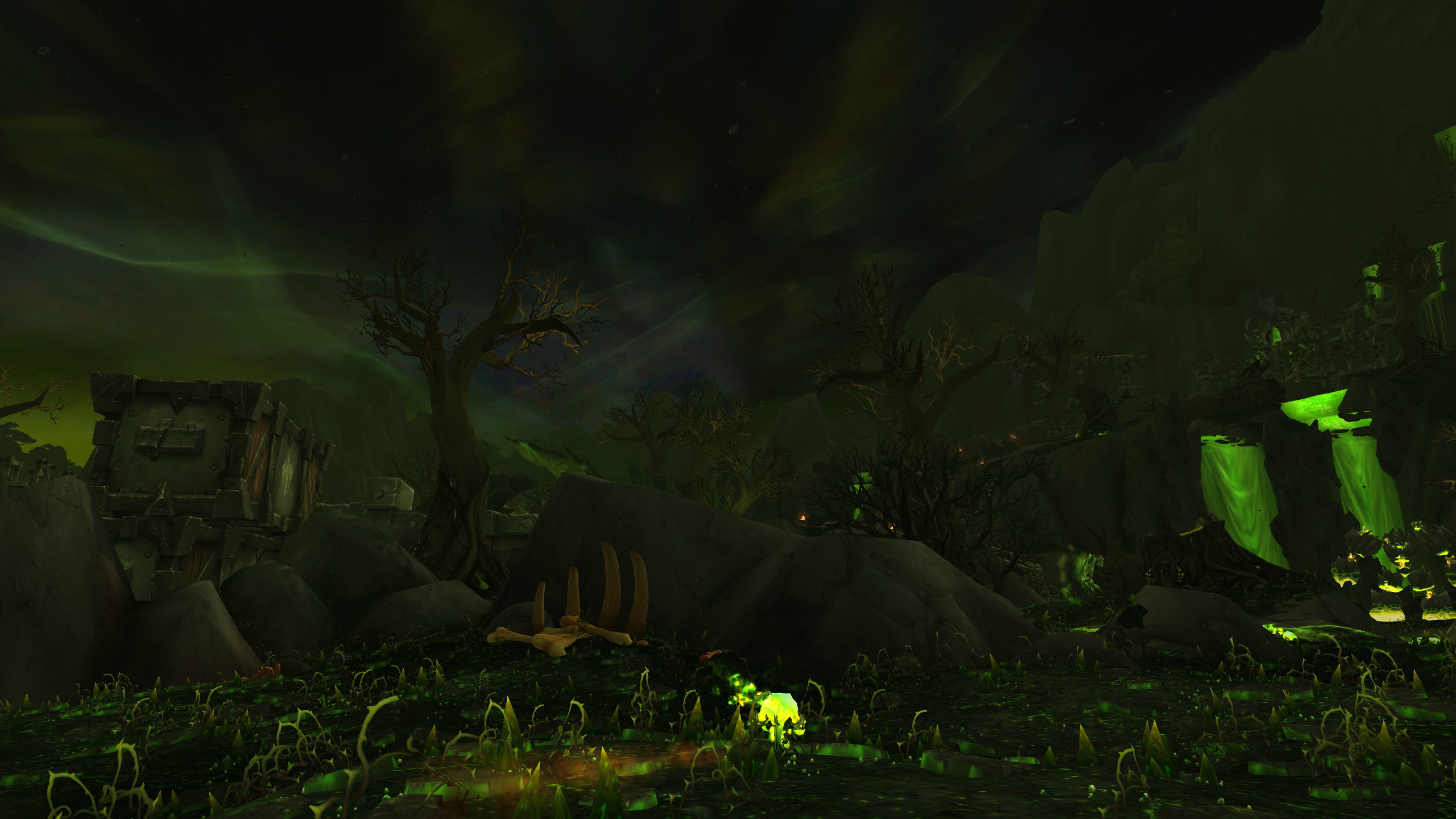
Before a single word of dialogue is spoken, World of Warcraft tells its story through sight alone. Every mountain ridge, crumbling ruin, and glowing crystal conveys meaning without text. Blizzard’s environmental design transforms landscapes into language, using color, architecture, and atmosphere to guide emotion and understanding. Across twenty years, Azeroth’s geography has evolved not just technically—but narratively, shaping how players feel and think within its world.
This article explores how WoW’s environments serve as silent storytellers, crafting narrative immersion through design rather than dialogue.
Worldbuilding Through Atmosphere
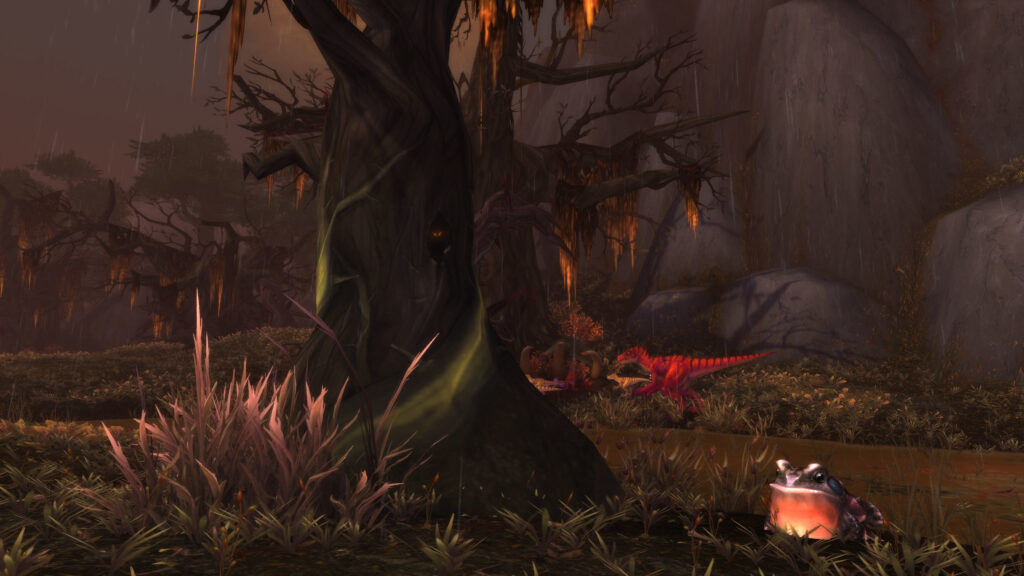
From the moment players step into a new zone, they’re immersed in tone. Tirisfal Glades feels mournful, its fog-drenched fields whispering of loss, while Nagrand captures the bittersweet peace of a world barely holding together. Lighting, weather, and sound design work in harmony to evoke emotion. Blizzard’s use of environmental storytelling ensures that even without quests, players instinctively understand a zone’s history and soul.
In WoW, the sky speaks louder than words.
Architectural Language and Cultural Identity
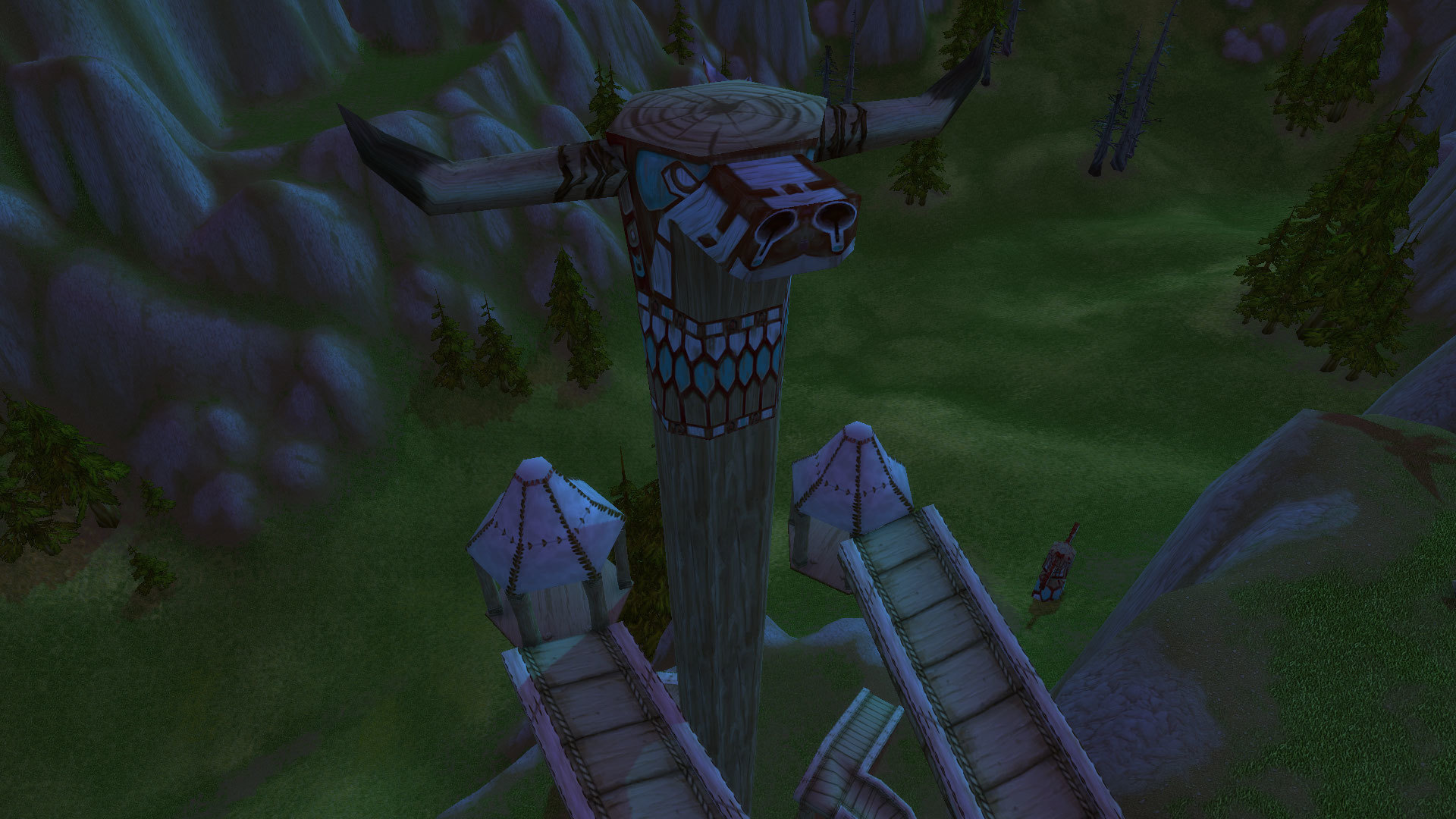
Every race in Azeroth builds with purpose. Dwarves carve permanence into stone; Night Elves weave spirituality into nature; Orcs construct with scars and survival in mind. These design choices tell cultural stories long before NPCs explain them. When you walk through Ironforge’s molten halls or Silvermoon’s golden streets, you’re not just visiting a city—you’re stepping into a philosophy of life, war, and resilience.
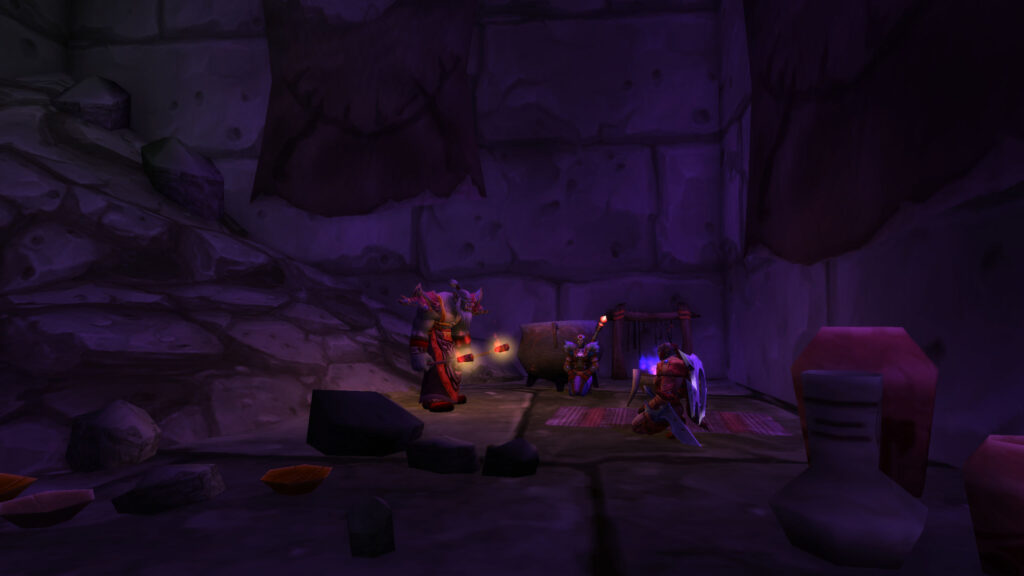
Architecture in WoW is anthropology written in pixels.
Environmental Storytelling as Narrative Memory
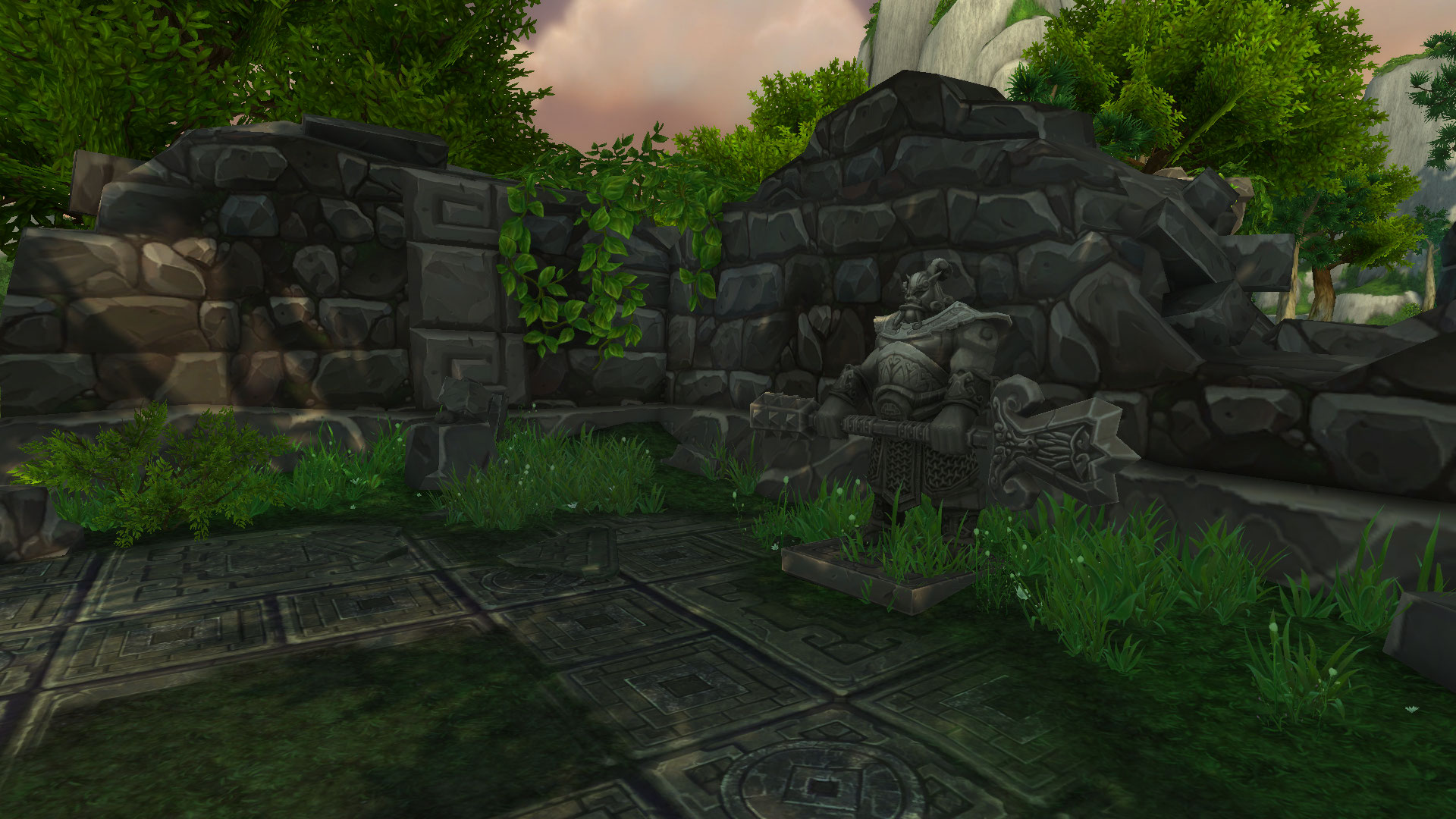
Unlike dialogue, environments remember. The ruins of Lordaeron still echo the plague’s legacy; the deserts of Silithus remain scarred by ancient gods. Players learn history through visual context—collapsed statues, abandoned villages, or overgrown fortresses that hint at triumph and tragedy. This storytelling through decay allows players to piece together forgotten tales organically. The world feels alive precisely because it remembers where it’s been.
In Azeroth, even silence has a story.
| Zone | Primary Mood | Visual Element | Narrative Function |
|---|---|---|---|
| Tirisfal Glades | Melancholy | Fog, decay, muted greens | Reflects Forsaken sorrow |
| Nagrand | Nostalgia | Floating islands, warm light | Symbolizes lost beauty of Draenor |
| Icecrown | Dread | Frozen wastelands, jagged spires | Foreshadows the Lich King’s tyranny |
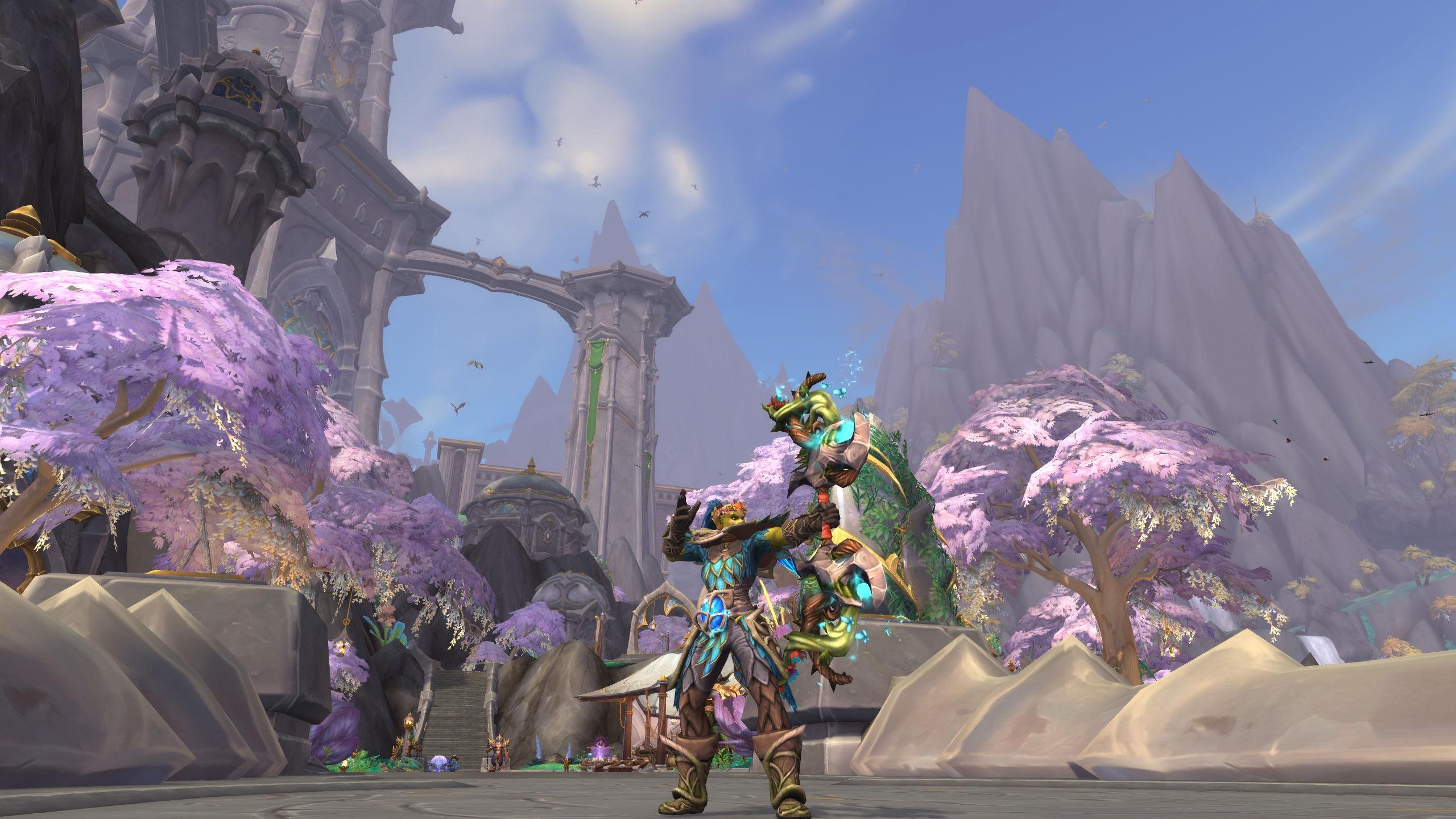
| Suramar | Elegance & regret | Broken arches, luminescent hues | Tells story of hubris and preservation |
| The Emerald Dream | Serenity | Bioluminescence, flowing flora | Embodies balance and rebirth |
The Evolution of Environmental Storytelling
Each expansion has advanced Blizzard’s environmental language. Wrath of the Lich King used verticality and color contrast to show oppression versus hope. Mists of Pandaria favored serenity and symmetry to reflect inner peace. Dragonflight elevated realism with motion and scale—soaring peaks and fluid skies that breathe with life. The result is an emotional throughline across decades, where design technology deepens narrative immersion rather than replacing it.
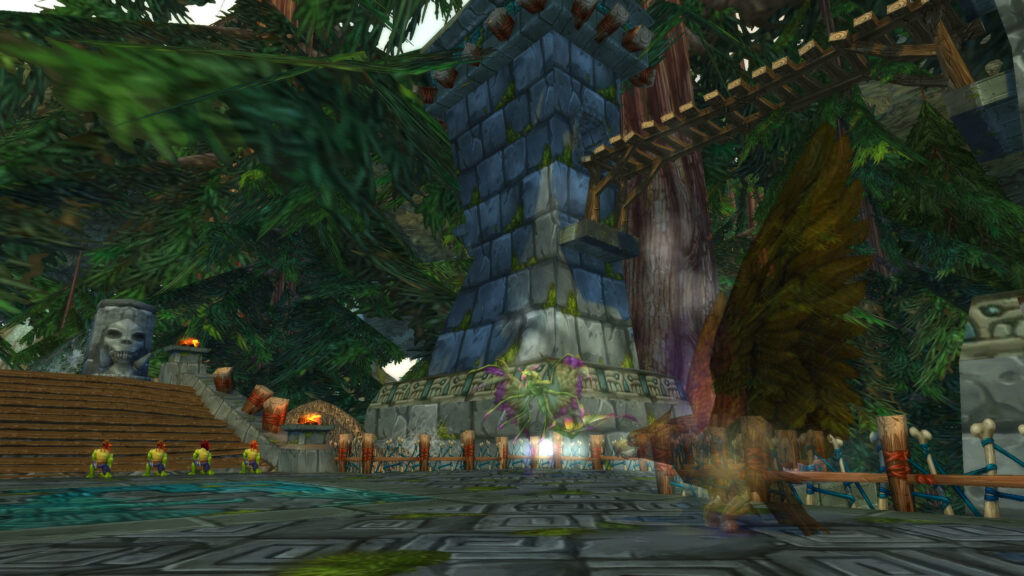
Progress in visuals has always served story, not spectacle.
Player Perspective and Emotional Framing
WoW’s environments guide not only travel, but emotion. Camera angles, elevation, and line of sight direct how players experience tension or wonder. The descent into Deepholm feels claustrophobic; the ascent in Storm Peaks inspires awe. This subtle framing turns players into participants in a visual narrative. Without realizing it, they read the environment like a script—interpreting every shadow, color, and vista as cues for feeling.
Every step in Azeroth is a paragraph in its visual story.
The War Within and Depth as Narrative
With The War Within, Blizzard expands its storytelling vertically—literally. The subterranean world beneath Azeroth transforms environmental design into layered narrative. Depth, darkness, and confinement communicate introspection and fear. Crystalline caverns reflect the inner turmoil of both characters and world. This visual descent mirrors emotional descent, proving once again that WoW’s storytelling thrives not in dialogue—but in design.
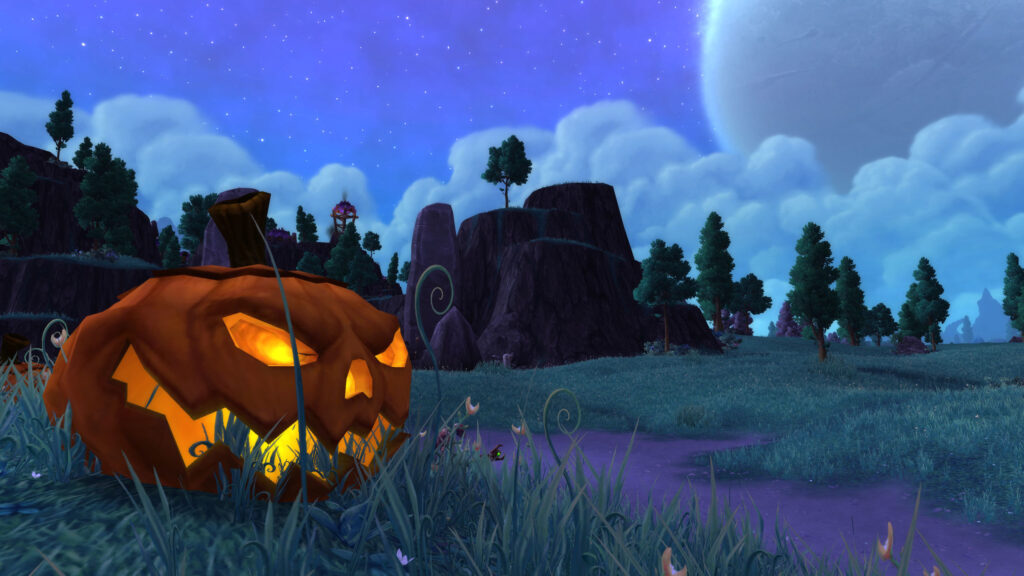
The deeper you go, the more the world reveals itself—without saying a word.
Conclusion
Visual storytelling is the unsung hero of Warcraft’s immersion. Long before a quest begins, the world has already spoken. Through architecture, atmosphere, and silence, Blizzard turns landscapes into literature and color into dialogue. Every patch of grass, every broken wall, is a memory preserved in design. WoW endures not because it tells stories—but because it shows them, one horizon at a time.
In Azeroth, the world itself is the narrator—and we are simply learning to listen.